Major Diseases of Pearl Millet (Bajra) Crop and Their Control
millet-farming
Pearl millet crops are affected by several diseases that can significantly reduce yield. Learn about major bajra diseases and their management methods.
KhetiwadiUpdated 18 March 20262 min read6,251 views
Pearl millet (Bajra) is an important cereal crop widely grown in dry and semi-arid regions of India. It is valued for both grain and fodder. However, several plant diseases can affect the crop and reduce productivity significantly.
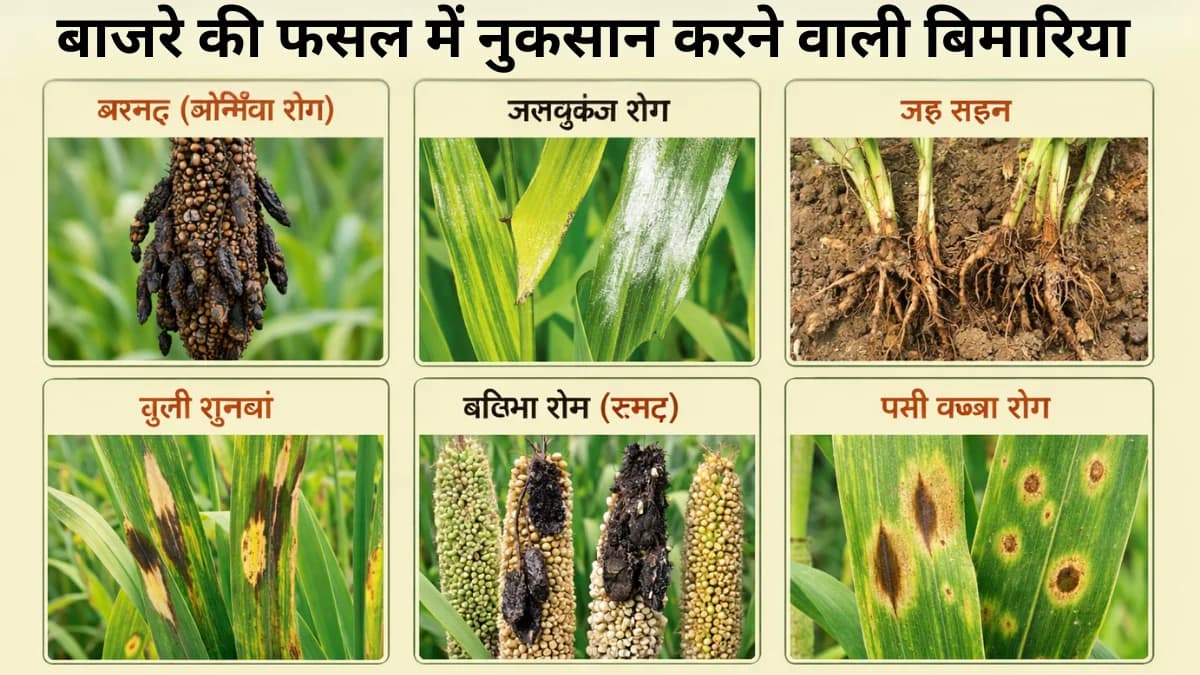
Two of the most damaging diseases of pearl millet are Downy Mildew (Green Ear Disease) and Ergot disease.
Downy Mildew is one of the most destructive diseases affecting pearl millet across many Indian states such as Maharashtra, Gujarat, Rajasthan, Punjab, Haryana and Uttar Pradesh. In severe cases, the disease can affect up to 30–45% of the crop.
This disease spreads through infected seeds, crop residues and favorable environmental conditions such as high humidity and temperatures between 22–25°C.
Seed treatment using fungicides like Ridomil MZ 72 WP is commonly recommended to prevent early infection.
Another important disease of pearl millet is Ergot. This disease is reported from several regions including Rajasthan, Gujarat, Karnataka and Tamil Nadu. Ergot infection occurs mainly during flowering when humidity is high and rainfall occurs.
Farmers can manage these diseases through crop rotation, deep summer ploughing, seed treatment with fungicides, and timely sowing of the crop.
Proper crop management and disease control practices can significantly reduce losses and improve pearl millet productivity.
Frequently Asked Questions
What is the most dangerous disease of bajra crop?
Downy mildew (green ear disease) is considered the most damaging disease of pearl millet.
How can farmers prevent bajra crop diseases?
Farmers can prevent diseases by using certified seeds, seed treatment, crop rotation, and timely fungicide sprays.
Related crops: bajra, pearl millet
Tags
- bajra disease
- बाजरा रोग
- pearl millet diseases
- millet crop protection
- bajra farming