Cumin Farming Guide: Complete Information on Jeera Cultivation
spices
Cumin is an important spice crop widely cultivated in India. Proper climate, sowing methods, and crop management can help farmers achieve good yield.
KhetiwadiUpdated 18 March 20262 min read4,973 views
Cumin (Cuminum cyminum) is one of the most important spice crops cultivated in India. It belongs to the Apiaceae family and is widely used in cooking and traditional medicine.
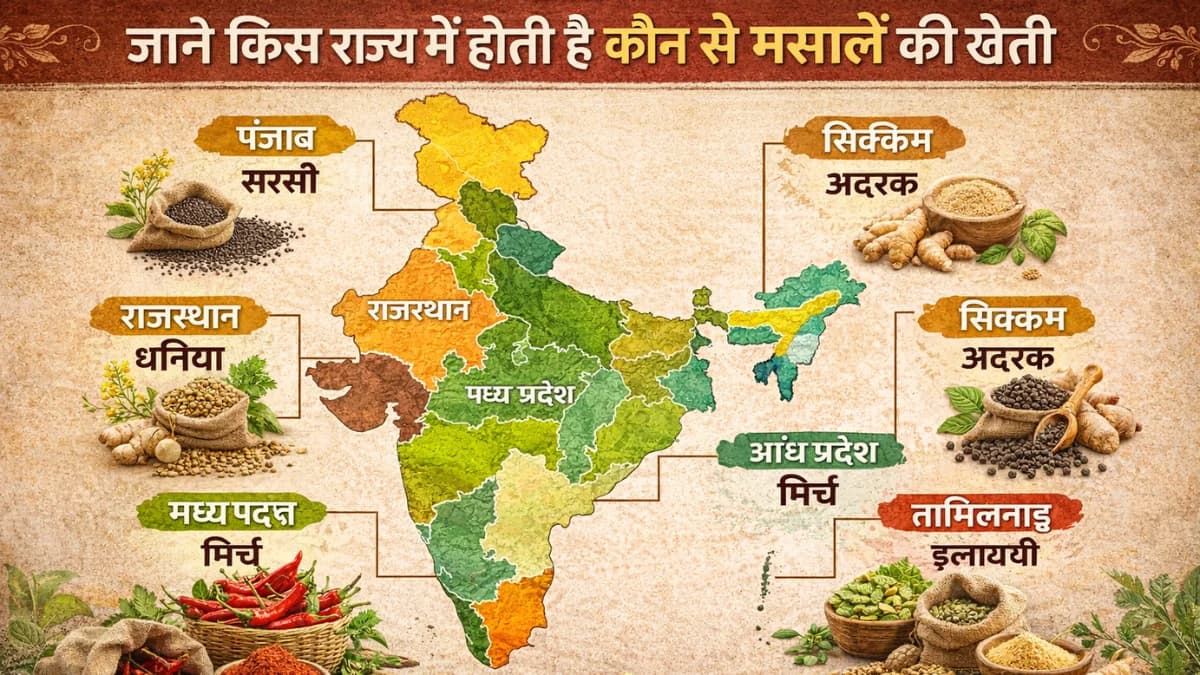
India is one of the largest producers and exporters of cumin seeds in the world. The major cumin producing states include Gujarat, Rajasthan and parts of Uttar Pradesh.
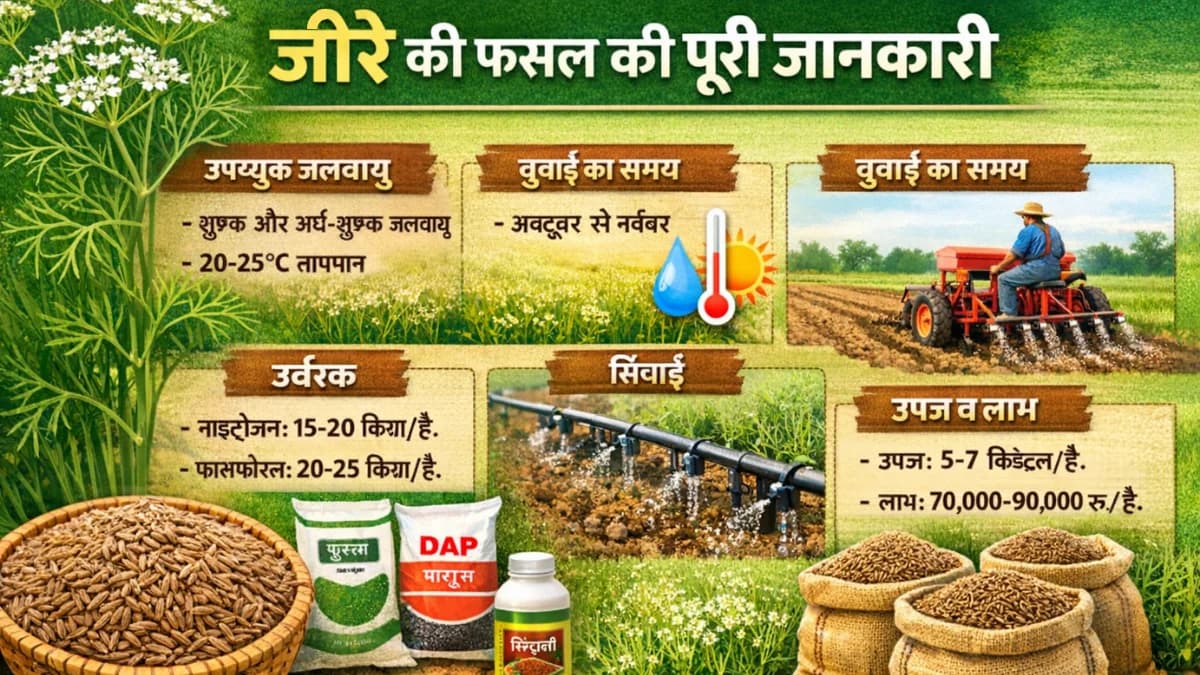
Cumin grows best in warm and dry climates with temperatures ranging between 20°C and 30°C. Well-drained sandy loam soil is considered ideal for its cultivation.
The crop is usually sown during the rabi season between October and December. Farmers generally maintain a row spacing of 30–40 cm and plant spacing of 10–15 cm.
Farmyard manure of about 4–6 tons per hectare is recommended for good soil fertility. Balanced use of nitrogen, phosphorus and potassium fertilizers helps improve crop growth and yield.
Cumin crops require irrigation during the early growth stage at intervals of 7–10 days.
Major pests affecting cumin include aphids, thrips and whiteflies, while common diseases include wilt, powdery mildew and blight.
Farmers can harvest cumin after 120–150 days when plants turn yellow-brown and start drying.
On average, farmers can obtain 400–500 kg of cumin seeds per hectare depending on crop management and climatic conditions.
Frequently Asked Questions
What is the best season for cumin cultivation?
The best season for cumin cultivation is the rabi season from October to December.
What is the average yield of cumin?
Farmers can get around 400–500 kg cumin yield per hectare depending on crop management.
Related crops: cumin, jeera
Tags
- jeera farming
- जीरे की खेती
- cumin cultivation
- spice farming
- cumin crop